
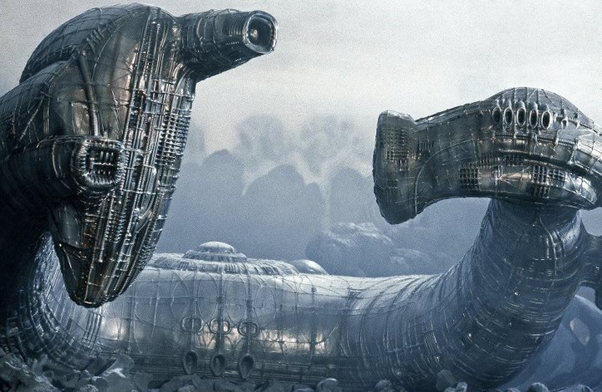
Every few years, humanity pauses and looks upward with renewed expectation. Sometimes it is a comet, sometimes a telescope, sometimes a rumour whispered through headlines and social media. In recent months, one particular year has begun to glow faintly on the horizon: 2026. According to modern retellings of the visions of Baba Vanga, that year may mark humanity’s first encounter with extraterrestrial intelligence. It is a claim that sits uncomfortably between fascination and scepticism, between ancient prophecy and modern science.
Whether 2026 becomes a turning point or simply another year that passes quietly into history is, in a sense, beside the point. What matters more is why we keep returning to such predictions, and what they reveal about our evolving relationship with the universe.
Baba Vanga, the blind Bulgarian mystic who died in 1996, left behind no written record of her prophecies. Everything attributed to her comes through followers, interviews, newspapers, and later reinterpretations. This absence of primary documentation has turned her legacy into something fluid, almost mythological. Over time, her name has become a vessel into which new fears and hopes are poured. Wars, pandemics, technological upheavals, and now aliens all appear under her banner.
The alleged prediction of extraterrestrial contact in 2026 stands out because of its specificity. Unlike distant forecasts set centuries ahead, this one sits uncomfortably close. Some versions describe a massive craft entering Earth’s atmosphere. Others speak more vaguely of an “encounter” or “contact” with beings from beyond our solar system. Almost invariably, the prediction is paired with darker themes: global conflict, instability, the sense that humanity is approaching some kind of threshold.
Yet when examined closely, the 2026 prophecy does not appear more credible than the many others attributed to Baba Vanga. It circulates primarily through annual prediction roundups, tabloid articles, and social media amplification. No dated statement, transcript, or contemporary witness places such a claim clearly in her voice. In this sense, the prophecy functions less as foresight and more as cultural storytelling, a mirror held up to our present anxieties.
That does not mean, however, that the underlying question it raises is frivolous. On the contrary, the question of extraterrestrial life has never been more scientifically respectable. For the first time in human history, we possess the tools not merely to speculate, but to investigate.
Modern astronomy has revealed a universe rich with planets. Thousands of exoplanets are now confirmed, many orbiting within habitable zones where liquid water could exist. We know that the building blocks of life are common, scattered through interstellar clouds and embedded in comets. Organic molecules are not rare accidents; they are part of the universe’s basic chemistry.
But science also teaches patience. If contact with extraterrestrial life occurs, it is unlikely to arrive as a dramatic descent from the clouds. The most plausible first signs would be subtle: a chemical imbalance in a distant atmosphere, a pattern of radio signals that defies natural explanation, or evidence of ancient microbial life closer to home. Discovery, not arrival, is the word science prefers.
There is an important distinction here. “Contact” does not necessarily mean conversation, visitation, or revelation. It may simply mean confirmation. A single data point strong enough to convince the scientific community that we are not alone would quietly, irrevocably alter humanity’s self-image. No prophecy required.
From a philosophical perspective, our fixation on dates like 2026 reveals something deeper. Humans have always sought moments of rupture, points in time where history bends and meaning crystallises. In ancient cultures, gods descended from the sky. In religious traditions, signs appeared in the heavens. Today, in a technological age, the unknown wears the mask of extraterrestrials. The characters change, but the narrative remains. We want the universe to speak back.
Predictions such as Baba Vanga’s endure not because they are accurate, but because they resonate. They give shape to an unspoken intuition that humanity stands at the edge of something new. Artificial intelligence is transforming cognition. Space telescopes peer deeper into cosmic history than ever before. Governments release previously classified material on unidentified aerial phenomena. The world feels less stable, more complex, more open than it did even a generation ago.
Against this backdrop, the idea that “someone saw it coming” is comforting. It suggests that the chaos has a script, that the unknown is not entirely blind. But science reminds us of a harder, more beautiful truth: the universe does not operate on our calendars. It does not announce its revelations in advance. Discovery happens when conditions align, not when dates demand it.
If extraterrestrial intelligence exists, it may be unimaginably old, unimaginably distant, or unimaginably different from us. It may never come here at all. Or it may already have passed unnoticed, leaving behind only faint signatures that our instruments are just beginning to recognise. None of these possibilities care whether the year is 2026.
And yet, the question remains alive, pressing, luminous. Perhaps that is the real significance of the prophecy. Not that it predicts an event, but that it marks a moment in our own development. A moment when humanity feels ready, or at least restless, for companionship beyond Earth. A moment when we are capable of asking the question seriously, without superstition yet without arrogance.
In that sense, every year is potentially the year of contact. Whether 2026 delivers a headline-worthy revelation or slips by unnoticed, the deeper journey continues. We are learning to listen more carefully to the cosmos, to interpret faint signals without projecting our fears or fantasies onto them. We are learning, slowly, that the universe is not obliged to perform, only to exist.
And perhaps the most profound contact we will ever make is not with another civilisation, but with a new understanding of ourselves: a species that finally realises it is neither the centre of creation nor an accident, but a participant in a vast, unfolding story still very much in progress.
The sky, as always, remains silent. But it is no longer empty.
Johan West is the author of nonfiction and science fiction works that explore cosmology, consciousness, ancient knowledge, and humanity’s evolving relationship with the universe. His latest book, The Eye of Creation, examines the profound question of why existence itself is possible at all.