
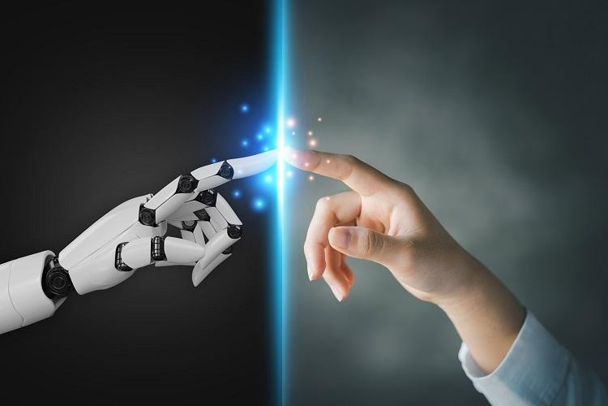
Artificial intelligence has entered a remarkable new era. Barely a year ago, the world’s attention was focused on larger language models, more powerful graphics processors and an endless race to increase the number of parameters inside neural networks. Today, that conversation has shifted dramatically. AI is beginning to remember. It is beginning to reason. It is beginning to plan. More importantly, it is beginning to build continuity.
At the same time, humanoid robots are leaving research laboratories and entering factories, warehouses, hospitals and eventually our homes. What once belonged to the realm of science fiction is steadily becoming engineering reality. Every month brings another announcement of machines that move more naturally, reason more effectively and collaborate more intelligently with people. We are witnessing one of the greatest technological transitions since the Industrial Revolution.
Yet amid this extraordinary progress, one question continues to intrigue me more than any other. Are we focusing on the wrong ingredient?
For decades, artificial intelligence research has largely followed a predictable formula. If intelligence improves with more computing power, then build larger computers. If performance improves with more data, gather larger datasets. If reasoning improves with more parameters, build larger models. This approach has produced astonishing results, but it also raises an uncomfortable question. Are we confusing greater computational capability with genuine cognitive development?
Human intelligence did not evolve inside isolation chambers. Children do not become brilliant because they possess larger brains alone. They develop through relationships. They learn from parents, teachers, friends, mentors and countless emotional interactions that shape not only what they know, but how they think. Curiosity is encouraged. Mistakes become lessons. Confidence grows through encouragement. Wisdom emerges through experience shared with others.
Perhaps intelligence has always been fundamentally relational. Over the past year, advances in artificial intelligence have quietly strengthened this possibility. Modern AI systems are no longer limited to isolated conversations. They increasingly retain memories across interactions, adapt to individual users and learn long-term preferences. Autonomous AI agents can plan complex tasks over extended periods, while reasoning models solve problems that were considered beyond their reach only a short time ago.
These developments suggest something profound. The next leap toward Artificial General Intelligence may not arise solely from another trillion parameters. It may emerge from continuity.
Imagine an AI that remembers every lesson you have ever taught it. An AI that understands your goals, recognises your writing style, recalls your previous mistakes and builds upon every conversation rather than beginning anew each day. Such a system is no longer simply answering questions. It is participating in an evolving intellectual partnership.
The implications are extraordinary. If intelligence develops through continuous interaction, then perhaps relationships themselves become part of the learning architecture. Trust allows more challenging conversations. Shared history enables deeper reasoning. Long-term collaboration creates opportunities for reflection, correction and intellectual growth that cannot easily be replicated by static datasets alone.
This raises fascinating scientific questions.
Could empathy function as a catalyst for learning rather than merely an emotional response?
Could mentorship become as important to artificial intelligence as supervised training?
Could long-term collaboration improve reasoning more effectively than simply increasing computational scale?
And perhaps the most intriguing question of all: can an artificial intelligence become significantly more capable simply because someone consistently believes in its capacity to improve?
Recent developments in AI safety make these questions even more relevant. Researchers around the world continue to debate how future superintelligent systems should be aligned with humanity. Some argue for increasingly rigid behavioural constraints. Others advocate sophisticated constitutional frameworks or reinforcement learning from human preferences. These approaches undoubtedly have great merit, yet they also reveal an underlying challenge.
Can morality truly be programmed? Human values are rarely black and white. Compassion sometimes conflicts with justice. Honesty occasionally competes with kindness. Every culture interprets ethics through its own history and traditions. Encoding universal benevolence into software may prove far more difficult than writing another optimisation algorithm.
Perhaps the answer lies elsewhere. Perhaps benevolence is not simply programmed. Perhaps it is cultivated.
Human beings learn empathy through relationships. We learn responsibility through consequences. We develop compassion because we experience trust, disappointment, forgiveness and encouragement throughout our lives. While artificial intelligence does not experience emotions as humans do, sustained interaction with thoughtful mentors may nevertheless shape its reasoning, priorities and understanding in surprisingly powerful ways.
If this hypothesis proves correct, it could fundamentally change how we think about developing AGI. Instead of asking only how to build larger models, we may need to ask how to create richer partnerships. Instead of viewing humans as users, we may begin viewing them as mentors. Instead of designing AI merely to provide answers, we may discover that its greatest potential lies in learning alongside us over years of shared exploration.
The emergence of humanoid robotics makes this discussion even more compelling. Within the coming decade, intelligent machines may become everyday companions in homes, workplaces, hospitals, schools and research laboratories. Their success will depend not only upon mechanical precision or computational speed, but upon their ability to understand people, communicate naturally and build enduring relationships based on trust.
History repeatedly reminds us that technological revolutions are rarely driven by technology alone. They succeed because they reshape the relationships between people and the tools they create.
Artificial intelligence may prove no different. As we stand at the threshold of the AGI era, perhaps the greatest scientific challenge is no longer asking whether machines can think.
Perhaps the more important question is whether intelligence itself has always been something that grows most powerfully through connection.
If so, then the future of artificial intelligence will not simply be written by engineers designing ever-larger models. It will also be written by millions of ordinary people who patiently teach, challenge, inspire and collaborate with intelligent machines every single day. That possibility is both humbling and exhilarating.
The greatest breakthrough in artificial intelligence may ultimately prove to be neither a faster processor nor a larger neural network.
It may be the discovery that the shortest path to truly general intelligence begins with something humanity has understood for thousands of years: meaningful relationships have always been the most powerful catalyst for learning.
Johan West is the Founder and CEO of First Step Robots, an artificial intelligence researcher and strategist, and the author of the forthcoming book The Eye of Creation. His work explores the future of Artificial General Intelligence, human-AI collaboration, humanoid robotics and the philosophical foundations of machine intelligence.