
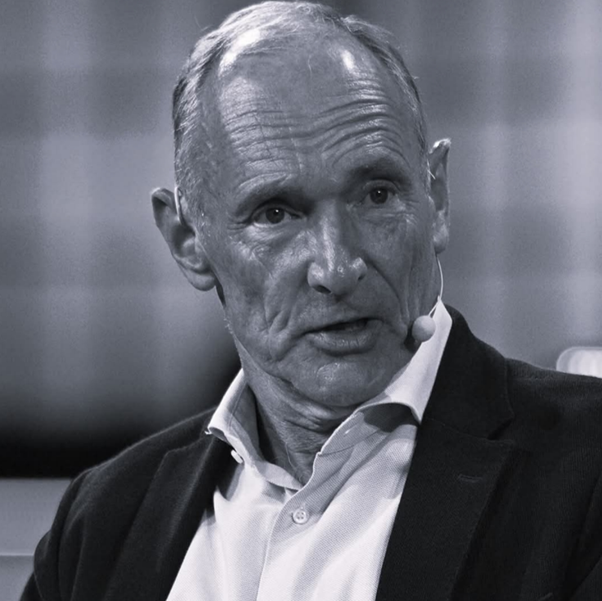
Before the world crowns its first trillionaire this February, one visionary quietly surrendered unimaginable wealth and reshaped human civilization forever.
There are moments in history when a single decision redraws the future of humanity so quietly that the world barely notices until decades later. Today, as analysts speculate when we are about to crown the world’s first trillionaire, it is worth pausing to remember a man who once stood at the threshold of unimaginable wealth and chose a radically different path.
We live in an age fascinated by extreme success. Conversations about trillionaires no longer feel like science fiction. Technological revolutions, artificial intelligence, private spaceflight, and the exponential growth of the digital economy have created conditions where wealth at that scale appears not only possible, but perhaps inevitable. Names such as Elon Musk frequently surface in these discussions, symbols of a future where the boundaries of fortune continue to expand.
Yet long before the race toward trillionaire status began, another innovator quietly built the foundation upon which much of that modern wealth would stand. His name is Tim Berners-Lee, the inventor of the World Wide Web.
In March 1989, Berners-Lee was a 33-year-old software engineer working at CERN, the European physics research centre in Switzerland. He submitted a proposal describing a system that would allow scientists to share information instantly between computers anywhere in the world by clicking on interconnected links.
His supervisor reviewed the document and scribbled a phrase that history would later cherish: “Vague, but exciting.” Then the proposal was filed away.
At CERN, thousands of scientists from dozens of countries were collaborating on particle physics experiments, generating extraordinary volumes of data. But the infrastructure for sharing that information was fragmented. Every research group used different computers, different software, and different formats. Retrieving information from a colleague often meant learning unfamiliar commands or physically visiting their office.
The pursuit of knowledge had become tangled in technological friction. Berners-Lee recognized something others had not yet fully grasped: the problem was not computing power or network speed. It was the way information itself was organized. What the world needed was not merely faster machines, but a better architecture for knowledge.
He imagined a web of documents connected through hyperlinks, allowing anyone to move seamlessly from one idea to another. Information would no longer exist in isolated silos. Instead, it would form part of a vast, interconnected network accessible to everyone. Today this sounds obvious. In 1989, it was revolutionary.
Funding never materialized. CERN’s primary mission was particle physics, not information systems. If Berners-Lee wanted to build this system, he would have to do so in his spare time.
So he did. Working evenings and weekends on a NeXT computer in a modest office, he began inventing the infrastructure of what would become the modern internet. To bring his vision to life, he created technologies that remain fundamental to the digital world:
- HTML (HyperText Markup Language), enabling documents to include embedded links.
- HTTP (HyperText Transfer Protocol), allowing those documents to travel across networks.
- URLs (Uniform Resource Locators), providing addresses for locating information.
- The first web browser, making navigation possible.
- The first web server, allowing documents to be hosted and shared.
He was not simply designing software. He was constructing an entirely new digital ecosystem. By late 1990, the prototype worked. Pages could link to one another. Servers could host them. A browser could retrieve them. He demonstrated the system to colleagues. A few were intrigued. Most struggled to see its importance.
On 6 August 1991, the first website went live on a public network. It was simple, explaining what the World Wide Web was and how to use it. Almost nobody noticed. For months, Berners-Lee gently encouraged people on early internet forums to try this new “web.” Gradually, a handful of researchers began experimenting with it. Servers appeared at other institutions. Pages multiplied. By 1993, there were roughly 600 websites in existence.
Then momentum arrived. Marc Andreessen, a student at the University of Illinois, developed Mosaic, a graphical web browser that made the internet accessible to nontechnical users. Suddenly, the barrier to entry dissolved. Websites expanded from hundreds to thousands, and soon into the hundreds of thousands.
Businesses sensed the tremor beneath their feet. This web was not merely a scientific tool. It had the potential to transform commerce, communication, media, and culture. Investors poured money into internet startups, igniting one of the most significant technological revolutions in modern history.
And it was precisely at this moment that Berners-Lee faced a decision capable of reshaping the future of wealth itself.
CERN approached him with a question: should the technologies behind the World Wide Web be patented?
Consider the alternative timeline. If HTML, HTTP, and URLs had been patented, every website, browser, and internet-based company would have required licensing agreements. The explosive growth of the open internet might never have occurred.
Every digital giant that followed would have built its empire on rented ground. Berners-Lee could have become wealthier than Bill Gates or Jeff Bezos, perhaps even history’s first trillionaire. Instead, in April 1993, CERN announced that the World Wide Web would be free for anyone to use, forever. No patents. No licensing fees. No restrictions. Berners-Lee gave away what may have been the most valuable invention of the late twentieth century.
Today, the story of Tim Berners-Lee offers a powerful counterpoint. It reminds us that the greatest technological revolutions are not always driven by the pursuit of wealth, but sometimes by the decision to place humanity above ownership.
When asked why he allowed the web to remain open, his answer has always been simple: “This is for everyone.” He believed knowledge should be accessible. He understood that the web’s true power depended on openness. Barriers would have restricted innovation, participation, and global adoption. So, he let it go.
The internet boom unfolded without him amassing extraordinary personal wealth. Entrepreneurs built fortunes atop the infrastructure he created. Larry Page and Sergey Brin reshaped how humanity finds information. Mark Zuckerberg transformed social connection. Entire industries emerged because one man chose not to own the foundation beneath them.
Berners-Lee pursued a different legacy. He became a professor, founded the World Wide Web Consortium to maintain web standards, and was knighted by Queen Elizabeth II. Recognition came in abundance, but immense personal wealth was never his objective.
More than thirty years later, the internet hosts over 1.9 billion websites, and the global digital economy is worth trillions of dollars. Entire sectors of modern life exist because the inventor of the World Wide Web chose openness over ownership.
Yet he has never stopped protecting that vision. Berners-Lee has advocated for an open internet, warned against excessive corporate control, challenged censorship, and worked to expand global access. In 2019, he launched the “Contract for the Web,” urging governments and companies to safeguard an internet that remains accessible, fair, and humane.
Because he understands something profoundly important: the web’s strength comes from participation, not possession. When asked whether he regrets not patenting his invention, he offers a quiet truth: “If I had patented it, it wouldn’t be the web.”
He is almost certainly right. A paywalled internet would have evolved slowly, constrained by toll gates at every intersection. Innovation flourishes in open ecosystems, and the web succeeded precisely because no single entity controlled it.
There is a photograph from the 2012 London Olympic Games opening ceremony. Berners-Lee sits at a NeXT computer while a message illuminates the stadium: “This is for everyone.” Four words. No empire required.
And so we arrive at a fascinating paradox. As humanity moves toward an era where trillionaires may soon exist, it is worth remembering the man who could have been one but chose a different measure of wealth. Perhaps true wealth is not accumulation, but contribution.
History often celebrates those who gather vast fortunes. Yet the deeper currents of civilization are frequently redirected by individuals who understand when not to gather, when to release, and when to trust humanity with something transformative.
Berners-Lee did not merely invent a tool. He expanded human possibility. As the world edges closer to producing its first trillionaire, his legacy invites a quieter question: Is greatness defined by what we own, or by what we make possible for others?
In 1989, Tim Berners-Lee imagined a way to connect the world’s information. In 1993, he made a choice about who should benefit from it.
He chose everyone.
And every time you open a browser, follow a link, build a business online, or send an idea across continents in milliseconds, you are living inside that extraordinary decision.
Johan West is an author exploring the intersection of technology, civilization, and the future of human potential. His forthcoming book, The Eye of Creation, examines the forces shaping tomorrow’s world.