
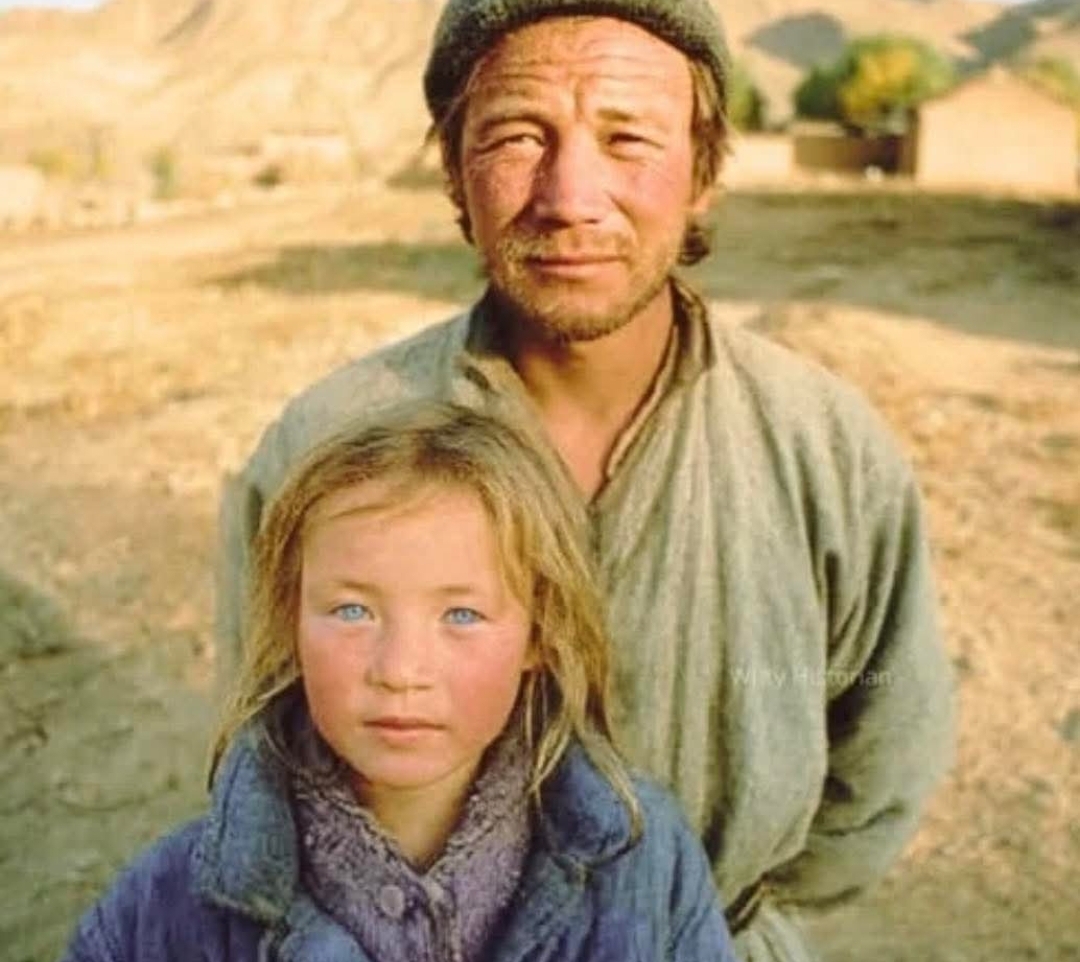
History has a habit of pretending that ancient civilisations lived in neat, separate boxes. Rome here. China there. Between them, a convenient blur labelled “unknown.” But every now and then, a place refuses to cooperate with that tidy version of the past. One such place lies on the dusty margins of China’s Gansu province, where wheat fields fade into desert and the Silk Road once hummed with caravans, rumours, and ambition. The village is called Liqian, and for decades it has unsettled historians with a question as improbable as it is irresistible: did Roman soldiers once settle here, at the far end of the known world?
The mystery begins not in China, but in blood and sand nearly two thousand years earlier. In 53 BCE, at the Battle of Carrhae, Rome suffered one of its most humiliating defeats. Marcus Licinius Crassus, wealthy, ambitious, and disastrously overconfident, marched his legions into Mesopotamia and straight into a Parthian trap. Tens of thousands of Roman soldiers were killed or captured. Crassus himself was executed, his head paraded as a symbol of imperial hubris. What became of the prisoners, however, remains uncertain. Roman sources fall silent. And silence, in history, is often where legends are born.
Some ancient accounts suggest that captured Roman soldiers were not simply slaughtered but transported eastward, repurposed as mercenaries or frontier guards by their conquerors. The Parthians, pragmatic masters of empire, had little reason to waste trained infantry. From there, the long march east becomes less implausible than it first appears. Central Asia at the time was not a void but a living network of routes, alliances, and shifting borders. Men moved. Cultures overlapped. Identities blurred.
This is where China enters the story. During the Han dynasty, imperial China was deeply engaged with the western regions. The Silk Road was not merely a trade route for silk and spices; it was a conduit for diplomats, soldiers, hostages, and ideas. Chinese chronicles describe encounters with foreign fighters whose tactics puzzled Han commanders. In one account, enemy troops are said to have formed disciplined, interlocking shield formations unlike anything seen in traditional Chinese warfare. To some scholars, this sounded eerily similar to the Roman testudo, the famous “tortoise” formation perfected by legionaries centuries earlier.
The idea lay dormant until the mid-twentieth century, when Oxford scholar Homer H. Dubs revived it with academic audacity. He proposed that a group of Roman prisoners may have fought in Central Asia decades after Carrhae and were eventually absorbed into Han frontier settlements following a conflict known as the Battle of Zhizhi in 36 BCE. One such settlement, Dubs argued, could have been Liqian itself. Even the name intrigued him. “Liqian,” he suggested, might derive from a Chinese term once used to describe distant western lands, possibly even Rome.
What transformed this theory from scholarly curiosity into global fascination were the villagers themselves. Visitors to Liqian noticed something unexpected. Some locals had lighter hair, green or blue eyes, and facial features that did not fit the stereotypical image of northern Han Chinese populations. Journalists arrived. Cameras followed. Headlines bloomed. Had Rome, in its greatest moment of expansion, left a human footprint at the very edge of China?
Science, inevitably, was asked to weigh in. Genetic studies in the late twentieth and early twenty-first centuries produced results that were tantalising but frustratingly inconclusive. Some DNA samples revealed traces of western Eurasian ancestry among villagers. To enthusiasts, this was vindication. To sceptics, it proved very little. Northwest China had been a genetic crossroads for millennia. Long before Rome’s legions marched east, Indo-European peoples such as the Yuezhi, Wusun, and Tocharians moved through these lands, trading, settling, and intermarrying. The Silk Road did not merely transport goods; it carried genes.
More comprehensive genetic analyses later showed that the majority of Liqian’s population aligns firmly with East Asian haplogroups. Any western markers present were faint, diluted, and impossible to date with precision. No genetic fingerprint pointed decisively to Italy, let alone to Roman legionaries. Archaeology, too, refused to cooperate. No Roman coins. No Latin inscriptions. No unmistakable military artefacts buried beneath the soil. The ground, stubbornly silent, offered no helmet or gladius to clinch the case.
And yet, the story refuses to die.
Perhaps that is because Liqian represents something deeper than a yes-or-no historical verdict. It sits at the intersection of what we know and what we suspect, where the limits of evidence meet the vastness of human movement. The ancient world was not a collection of sealed empires politely respecting their borders. It was restless. People were captured, displaced, resettled, and absorbed into cultures not their own. Children were born speaking new languages, worshipping new gods, carrying fragments of forgotten homelands in their blood.
Liqian today has embraced the legend with open arms. Roman-style statues stand where wheat once grew unremarked. Tourists arrive seeking a brush with lost history. Scholars sigh, journalists smile, and villagers tell stories that blend memory, pride, and possibility. The town has turned uncertainty into identity, and in doing so, has revealed something profoundly human. We are drawn to stories of connection, especially ones that collapse distance and remind us that the world has always been smaller, more entangled, than we imagine.
Whether Roman soldiers ever stood beneath the skies of Gansu may never be proven. The evidence may forever hover just below the threshold of certainty. But perhaps that is not a failure of history. Perhaps it is its quiet triumph. Liqian reminds us that the past is not only a ledger of facts but a landscape of movement, loss, adaptation, and survival. Somewhere between Rome’s shattered legions and China’s distant frontier, people lived, married, raised children, and disappeared into the great human story.
And sometimes, all that remains of them is a village, a rumour, and a question that refuses to be answered.
Johan West is the author of the forthcoming book The Eye of Creation, and a thinker writing across non-fiction and science fiction.