
Why the real revolution may not only be artificial intelligence, space colonisation or robots – but a quiet crack in the foundations of physics
It is 2026, and the world feels both astonishingly advanced and strangely tired.
Artificial intelligence dominates boardrooms and dinner conversations alike. GPU’s have become strategic assets, their prices soaring as nations quietly reposition themselves around data, computation and control. Robots are no longer confined to factories; they assist surgeons, monitor crops, patrol warehouses and increasingly share our daily spaces. Space agencies speak casually of permanent lunar infrastructure, while private companies talk about Mars with a confidence that borders on routine. Medical science, almost without fanfare, is curing diseases that only a decade ago were considered permanent life sentences.
And yet, for all this progress, something feels unresolved.
The geopolitical tensions of 2025 did not evaporate with the new year. Public trust in governments continues to erode. Many people sense that technology is racing ahead while meaning, coherence and leadership lag behind. We are surrounded by breakthroughs, yet strangely unmoved by them. Which raises a deeper question: if all of this is now “normal”, then what, exactly, lies ahead?
Not the next iteration of AI. Not a faster robot. Not even another planet with a flag planted on it. But the next shift that changes the way we understand reality itself. For more than a century, humanity’s relationship with space has been defined by one unyielding constraint: to move forward, something must be thrown backward. This is the essence of Newton’s third law and the tyranny of the rocket equation. Whether chemical rockets or ion thrusters, every spacecraft ever built has paid the same price. Fuel limits range, duration and ambition. Carry more propellant, and the vehicle becomes heavier, requiring yet more propellant to lift the propellant you already have. This constraint has shaped everything from satellite design to interplanetary missions. It is so fundamental that most engineers treat it as a law of nature rather than a practical limitation.
Which is precisely why the idea that follows is so unsettling.
What if propulsion were possible without propellant?
No exhaust.
No reaction mass.
No plume disappearing into the vacuum.
On paper, this should not work. And that is exactly why most scientists instinctively dismiss it. History is littered with claims of “reactionless drives” that collapsed under careful testing. Conservation of momentum has never lost a fight. And yet, in recent years, a small but persistent body of experimental work has refused to disappear. The underlying idea is deceptively simple and deeply uncomfortable. Electric fields exert pressure. In classical electromagnetism, the pressure exerted by an electric field on a surface is given by
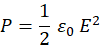
where is the permittivity of free space and
is the electric field strength. This is not speculative physics; it is standard Maxwellian electromagnetism, taught in undergraduate courses.
In symmetrical systems, such as a conventional capacitor, these forces cancel perfectly. Internal stresses balance, and the net force on the system is zero. Nothing moves. But symmetry is doing a great deal of work in that sentence.
When geometry becomes asymmetric, when field intensity is distributed unevenly across surfaces, the cancellation may no longer be exact. The pressure scales with , not
, which means small geometric differences can produce disproportionately large imbalances.
The result, at least experimentally, is a tiny but persistent net force. The obvious objection follows immediately: if momentum is conserved, where does the reaction go?
This is where the conversation leaves comfortable engineering and enters the murkier territory of fundamental physics. One hypothesis suggests that momentum may be exchanged with the electromagnetic field itself, or with the quantum vacuum, in ways that are negligible at ordinary scales but measurable under extreme field asymmetries. In such a framework, the “reaction mass” is not expelled particles, but the structure of space itself.
This is not free energy. No laws of thermodynamics are violated. Energy is still required to establish and maintain the fields. What changes is how momentum is transferred. It is a subtle distinction, but a profound one.
If this effect proves real and survives independent verification, the implications are difficult to overstate. Even extremely small continuous accelerations, applied over long periods, fundamentally alter mission design. A spacecraft accelerating at only one-thousandth of Earth’s gravity for months will eventually reach velocities that chemical rockets can achieve only through complex staging and gravity assists. Crucially, the same system can decelerate on arrival, something traditional propulsion struggles with unless additional fuel is carried.
In practical terms, this would mean satellites that never run out of station-keeping fuel, spacecraft that can operate for decades without refuelling, and interplanetary missions designed around energy availability rather than propellant mass. The rocket equation, which has dominated aerospace engineering since the dawn of spaceflight, would lose its stranglehold.
It is worth noting that none of this requires science-fiction levels of thrust. Even millinewton-scale forces become transformative when applied continuously and reliably. Physics, not spectacle, does the work.
Scepticism, however, is not only justified, it is essential. The scientific community has been misled before, often by effects that vanished once experimental artefacts were eliminated. Ion winds, thermal expansion, electromagnetic coupling to the environment and subtle measurement errors have all masqueraded as new physics in the past.
That is why this moment matters. The reported forces are no longer lost in experimental noise or marginal effects; they are large enough that independent replication should now be possible, and science ultimately asks for nothing more than that. Belief is irrelevant, reputation secondary. Either other laboratories can reproduce the measurements under controlled conditions, or the idea will quietly dissolve into the long archive of promising but incomplete work. If, however, those results hold, then something far more consequential follows, because physics does not bend easily, and when it does, textbooks must eventually follow.
My own view sits deliberately in that uncomfortable middle ground. This research deserves serious attention, not because of dramatic claims, but because of the people behind it and the way it has been approached. Dr. Charles Buhler is a former NASA engineer whose professional career focused on electrostatics, and he speaks with the restraint and caution of an engineer rather than the language of promotion. His team describes hundreds of repeatable experiments conducted over many years, with systematic efforts to eliminate the familiar sources of false thrust: ion wind, air effects, magnetic coupling, polarity reversal and unintended current flow.
The fact that the measured force scales predictably with voltage and geometry is precisely what one would expect from a real physical effect, not from random measurement artefacts. At the same time, this is not yet a confirmed breakthrough. Independent verification remains absent, and until an external university or government laboratory reproduces the results, the claims must remain provisional. Conservation of momentum remains the immovable wall; if a net force truly exists, momentum must be flowing somewhere, and until that pathway is clearly demonstrated, scepticism is not only justified, it is necessary. History in this field has been unforgiving, and rightly so.
What makes this moment especially compelling is its timing. Humanity is questioning almost everything at once: political systems, economic models, the nature of intelligence and even the meaning of consciousness itself. It would be strange if physics alone remained untouched by this wider re-examination. Every major civilisational leap occurred when an invisible force became visible. Electricity was once a curiosity, magnetism a puzzle, nuclear energy an impossibility. Each reshaped the world not because it arrived loudly, but because it reached something fundamental.
Perhaps the next transformation will not come from faster algorithms or larger rockets, but from recognising that space itself is not passive, empty or inert. That it possesses structure, pressure and properties we are only beginning to sense. If this technology is real, it will not announce itself with spectacle. It will appear first as anomalies engineers struggle to explain away: satellites that decay too slowly, trajectories that refuse to align with simulations, data points that persist long after every obvious error has been eliminated. Revolutions in physics rarely arrive with applause; they arrive with spreadsheets.
Whether this particular idea survives scrutiny or not, it tells us something important about where we stand in 2026. We are no longer merely building smarter machines. We are pressing, carefully and insistently, against the fabric of reality itself. And sometimes, when you press long enough, something pushes back.
Time, as always, will decide…
Johan West is the CEO of FirstStepConsulting. A more detailed report on this subject is available on request; readers are welcome to contact the author.