
Polarity, Integration, and the Future Shape of the Human Mind
If the first great question of our century concerns technological transformation, the second may concern something even more intimate: the structure of the human being itself. For while machines evolve around us, an equally profound evolution appears to be unfolding within us, psychological, social, and perhaps even civilizational in scale.
One of the most enduring principles observable across nature is polarity. The universe itself is not built upon uniformity but upon complementary forces held in dynamic tension. Positive and negative charges create electricity. Gravity negotiates constantly with expansion to shape galaxies. Even life depends on delicate balances, between stability and mutation, competition and cooperation, independence and belonging. Sameness rarely generates vitality. It is difference, properly integrated, that produces resilience.
Human civilization reflects this pattern with remarkable consistency. Across cultures and centuries, societies have been shaped by what we often describe as masculine and feminine orientations, not as rigid stereotypes tied exclusively to gender, but as archetypal modes of engaging with reality. One orientation tends toward exploration, risk-taking, construction, and confrontation with the unknown. The other leans toward relational awareness, preservation, empathy, and the weaving of social cohesion.
Civilizations, at their healthiest, have required both the spear and the hearth. The tension between these energies has historically generated creativity. When held in balance, it produces societies capable of innovation without losing continuity, strength without sacrificing compassion. When the balance collapses, in either direction , fragility often follows.
Yet something fascinating appears to be emerging in modern humanity. While polarity remains structurally necessary at the societal level, individuals themselves seem increasingly capable of psychological integration. The strong future human may not be defined by narrow archetypes, but by inner completeness, capable of analytical rigor alongside emotional intelligence, decisiveness tempered by empathy, resilience paired with sensitivity.
In earlier eras, survival often demanded specialization of traits. Today, complexity demands versatility. This integration may represent a form of maturity at the species level, less fragmented, more whole.
And yet, as we explore this possibility, we must tread carefully. Integration is not the same as erasure. A society that loses the creative tension between complementary forces risks drifting into homogeneity, and homogeneity seldom fosters adaptive strength. Growth requires contrast, just as music requires variation between notes. The question, then, is not whether polarity should disappear, but how it might evolve.
Modern debates sometimes frame social change in adversarial terms, as though the rise of one energy must necessarily suppress another. History suggests a more nuanced interpretation. The flourishing societies have rarely been those that silenced difference; rather, they were those that learned to orchestrate it.
This is particularly relevant as conversations about gender representation, institutional culture, and social priorities continue to unfold across the world. As participation broadens within historically male-dominated arenas, law, medicine, academia, leadership, institutions inevitably change. Every demographic shift carries with it subtle recalibrations of values, communication styles, and decision-making frameworks.
Change itself is neither inherently threatening nor inherently virtuous. Its significance lies in whether core standards endure.
For beneath debates about representation lies a deeper civilizational concern: can societies evolve while preserving excellence? Can empathy coexist with rigor? Can inclusivity flourish without compromising truth-seeking? Can institutions remain anchored in merit while becoming more humane? These are not partisan questions. They are structural ones.
History reminds us that institutions serve as the load-bearing pillars of civilization. The rule of law, the pursuit of knowledge, the integrity of scientific inquiry, these are fragile achievements, requiring continuous commitment to objectivity even when outcomes are uncomfortable. When such foundations weaken, societies seldom notice immediately. Decline often begins quietly, disguised as adaptation.
Yet it would be equally misguided to assume that earlier institutional cultures were flawless. Many excluded valuable voices. Many limited human potentials unnecessarily. Progress frequently involves widening participation without lowering standards, a delicate but essential balance.
Perhaps the real task before modern civilization is not choosing between tradition and transformation but learning how to carry forward the strongest elements of our inheritance while stepping into unprecedented terrain. And here technology re-enters the conversation with renewed force.
For technological evolution introduces a possibility that earlier generations could scarcely imagine that Homo sapiens may not represent the final draft of humanity. Every dominant human form has likely assumed its permanence. Yet evolution has always been a story of revision.
Some thinkers have proposed tentative names for a future phase, Homo technologicus, Homo symbioticus, even Homo transcendens. Each point toward the same underlying idea: a species whose cognitive reach is expanded through partnership with intelligent systems.
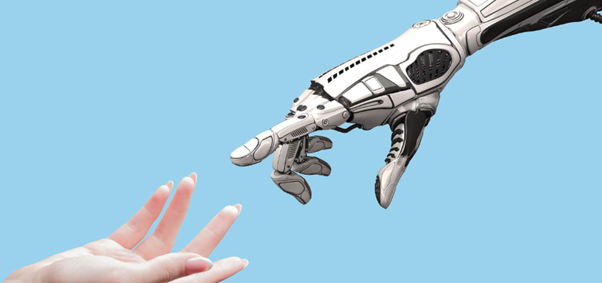
Importantly, the future is unlikely to belong solely to biological humans or to artificial intelligence. The far more stable trajectory appears to be symbiosis, mind extended through machine rather than replaced by it.
In truth, this extension has already begun. Memory is outsourced to digital archives. Navigation is entrusted to satellites. Communication transcends distance instantly. With each step, the functional boundary of the human nervous system stretches outward.
Technology has quietly become an auxiliary cortex. But this raises a profound question: if our capabilities expand indefinitely, what anchors our identity? What ensures that in becoming more powerful, we do not become less human?
The answer may lie precisely in the psychological integration we are beginning to cultivate. A technologically amplified species without emotional depth would be volatile. But a species that grows simultaneously in self-awareness, ethical reflection, and relational intelligence might achieve something unprecedented, power guided by maturity.
The challenge ahead is therefore not merely technological. It is existential. Can humanity expand outward while deepening inward? Can we become more capable without becoming less wise? The future will not ask us to abandon our humanity. It will ask whether we are prepared to inhabit it more fully.
For if polarity is the architecture of thriving systems, integration may be their evolution. And humanity, it seems, is learning, slowly, unevenly, but unmistakably , how to hold both.
Johan West is the author of nonfiction and science fiction works that explore cosmology, consciousness, ancient knowledge, and humanity’s evolving relationship with the universe. His latest book, The Eye of Creation, examines the profound question of why existence itself is possible at all.