
Moving Beyond Panels and Turbines: Embracing Intelligent Landscapes
For more than a decade, renewable energy has been defined visually by two dominant symbols: vast solar farms stretching to the horizon, and towering wind turbines punctuating skylines from coastlines to Karoo plains. They have served humanity well. But as we enter 2026, it is becoming increasingly clear that the next phase of renewable energy will not be about building more of the same. It will be about building smarter, lighter, and more integrated systems that work with nature rather than over it.
At Green Africa Energy, we see the future of renewables not as a competition between technologies, but as an evolution toward intelligent energy landscapes.
The Quiet Revolution in Solar Design
Solar is no longer just something you bolt onto rooftops or plant across hectares of valuable land. Across China, Europe, and parts of Asia, a new generation of photovoltaic technology is emerging: transparent, adhesive, flexible, and embedded directly into buildings.
Instead of heavy, load-bearing rooftop panels, we now see solar glass, stick-on PV films, and building-integrated photovoltaics (BIPV) that turn entire façades, windows, and even skylights into power generators. Office towers, shopping centres, homes, and factories can increasingly generate electricity without changing their visual identity or structural design.
China, already a global leader in renewable manufacturing, is accelerating deployment of these technologies. Entire buildings are becoming vertical power plants. This is not just elegant engineering; it is practical. It reduces rooftop structural loads, eliminates large mounting systems, and distributes generation exactly where electricity is consumed.
In many cases, the building itself becomes the solar farm.
Rethinking Large-Scale Solar Farms
This shift raises a necessary and uncomfortable question: should we continue covering productive land with massive solar arrays?
The world faces two urgent challenges simultaneously: decarbonising energy systems and feeding a growing population. Land is the common denominator. That is where agrivoltaics enters the conversation not as a compromise, but as a strategic solution.
Recent studies using double-sided vertical solar panels demonstrate that spacing panels eight to ten metres apart can optimise both electricity generation and crop yields. When designed correctly, crops such as barley and oats thrive, while panels capture sunlight from both sides. In higher latitudes, south-facing orientations further improve efficiency.
More importantly, agrivoltaic systems allow farming, grazing, biodiversity conservation, and energy production to coexist. In South Africa, this opens extraordinary opportunities: livestock grazing beneath panels, vineyards and orchards protected from heat stress, and indigenous vegetation like Cape fynbos restored between structures.
Some systems even allow for water condensation on panels, subtly contributing moisture back into the soil. This is renewable energy behaving like an ecosystem rather than an industrial imposition.
The Hidden Cost of Panels and Turbines
Yet, honesty matters. Solar panels and wind turbines are not environmentally neutral. Solar panels have an operational lifespan of roughly 20 to 25 years. At present, recycling technologies remain limited, expensive, and energy intensive. The uncomfortable reality is that today’s solar boom may become tomorrow’s waste management crisis if circular solutions do not mature quickly.
Wind energy carries its own burdens. Conventional turbines are visually dominant, mechanically complex, expensive to maintain, and undeniably harmful to birds and bats. Noise, community resistance, and aesthetic concerns increasingly slow approvals worldwide.
This does not mean wind or solar have failed. It means they are evolving.
The Rise of Silent Wind
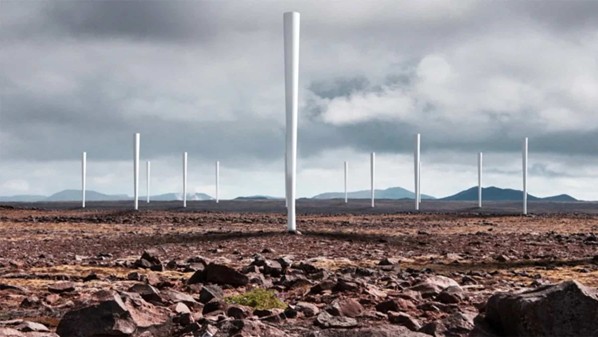
One of the most compelling developments in this evolution is the emergence of bladeless wind technology. Instead of spinning blades, these slender towers harness vortex-induced vibrations to generate electricity. Silent, bird-friendly, lightweight, and operational at low wind speeds, they represent a fundamentally different philosophy.
Companies like Vortex Bladeless have demonstrated that decentralised wind can work in urban, rural, and conservation environments where traditional turbines never could. While individual output is lower than conventional turbines, cost per watt, maintenance requirements, and environmental footprint are dramatically reduced.
These towers are not designed to replace large wind farms overnight. They are designed to fill the gaps, much like rooftop solar once did.
Energy, Mobility, and the Decentralised Home
Energy does not exist in isolation anymore. The rapid adoption of electric vehicles is reshaping how we think about power generation. An average EV requires roughly six modern solar panels to cover monthly driving needs. Charging at home using solar remains the cheapest, cleanest, and most grid-resilient option available.
But here again, integration matters. Instead of expanding rooftop arrays endlessly, future homes may rely on a combination of solar glass, micro wind towers, battery storage, and smart energy management systems. Homes become producers, vehicles become mobile storage, and communities become energy ecosystems.
This decentralisation reduces pressure on national grids, lowers infrastructure costs, and increases resilience against blackouts and extreme weather events.
From Energy Projects to Energy Landscapes
Perhaps the most important shift in 2026 is philosophical. Renewable energy is moving away from brute scale toward intelligent design. The goal is no longer to dominate land or skylines, but to weave energy generation into the fabric of daily life.
In China, solar farms shaped like pandas captured imaginations. But the next chapter will be less symbolic and far more practical: solar that disappears into architecture, wind that hums silently alongside homes, and landscapes that feed people while powering cities.
At Green Africa Energy, our role is not to sell technology for technology’s sake. It is to guide clients, developers, farmers, and municipalities through this transition with clarity, realism, and long-term responsibility.
The future of renewable energy will not be defined by how much land we can cover, but by how intelligently we can design systems that respect it.
And that, perhaps, is the most renewable idea of all.
Johan West is the Managing Director of GreenAfricaEnergy renewable energy consultants for Africa.
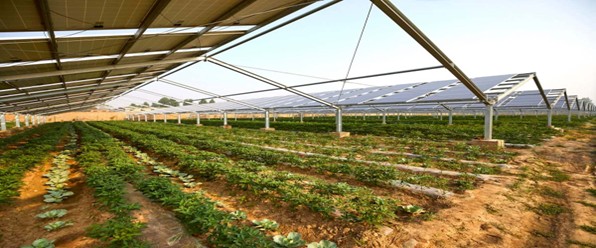
Photo Credit: iStock
Scientists studying how land devoted to large-scale solar arrays can best be used to also grow food have made a breakthrough discovery that could allow such combined-use projects to flourish. One of the key challenges facing so-called agrivoltaic projects, which combine solar panels and crop production, has been limiting the impact of shade on plant growth and energy production.