
The World’s Most Expensive Conversation Meets the Hard Limits of Physics
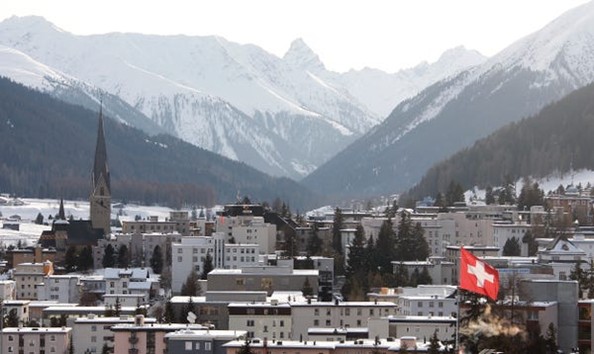
Every January, Davos performs the same quiet transformation. For most of the year it is a restrained Alpine town, orderly, efficient, and faintly timeless. Then, for one week, it becomes a mirror held up to the global system itself. The World Economic Forum Annual Meeting returns from 19 to 23 January 2026, drawing presidents, prime ministers, central bankers, tech visionaries, activists, journalists, and an entourage of power that could populate a small nation.
The official theme this year, “A Spirit of Dialogue,” sounds almost gentle. Dialogue suggests listening, patience, compromise. But Davos is rarely gentle. It is intense, compressed, and transactional. Conversations happen in corridors, hotel lounges, hastily arranged side rooms, and yes, sometimes on ski lifts. Deals are not signed here, but trajectories are set.
Nearly 3,000 participants from more than 130 countries are expected, including around 65 heads of state and government and hundreds of global CEOs and board chairs. The gathering remains unmatched in its density of influence. And that is precisely why it attracts both fascination and fatigue.
To many observers, Davos has become shorthand for elite detachment. The optics are hard to ignore: a global summit on inequality, climate change, and social cohesion hosted in one of the world’s most exclusive resorts. The nickname you used, the “duffers meeting,” carries more truth than sarcasm. This is a clubhouse. The question is whether it still matters.
What Davos says it wants to talk about
Strip away the noise, and the 2026 agenda circles around a familiar but unresolved set of tensions:
- Geopolitics and cooperation in a fractured, competitive world
- Growth and resilience amid economic fragmentation
- Innovation and AI, shifting from hype to measurable return on investment
- Jobs, skills, and social stability in an automated age
- Prosperity within planetary boundaries, including climate, energy, water, and nature
On paper, it is the right list. No obvious blind spots. AI, unsurprisingly, looms large. Last year it was about “agentic systems.” This year the mood is colder, more CFO-driven. What is the return? What does it replace? What does it actually do for margins, productivity, and competitiveness?
Politics, too, presses hard against the glass walls of Davos. Donald Trump’s presence casts a long shadow, whether he attends physically or not. His economic worldview, built around tariffs, national interest, and domestic affordability, collides directly with the globalised assumptions that Davos has long championed. Even discussions about Greenland find their way into Alpine meeting rooms, proof that geopolitics now travels everywhere.
And yet, absence speaks just as loudly. Mozambique’s president cancelled his attendance to deal with catastrophic flooding at home. That single decision captures the uncomfortable truth beneath the polished panels: while the world debates climate strategy, climate impacts no longer wait politely for summits to conclude.
The carbon paradox at the heart of Davos
No discussion of Davos is complete without confronting its most persistent contradiction. Climate change sits high on the agenda. Yet the event itself has become emblematic of carbon-intensive behaviour. Multiple analyses over recent years have shown dramatic spikes in private jet traffic during the forum. In some editions, emissions linked to private aviation servicing Davos increased several-fold compared to baseline weeks. Hundreds of additional flights, many carrying only a handful of passengers, converge on regional airports within days.
This is not a moral judgement so much as a physical observation. Carbon dioxide does not care about intent, credentials, or keynote speeches. It accumulates molecule by molecule.
The World Economic Forum points to livestreaming, carbon accounting, and sustainability initiatives. These are not meaningless. But the symbolism remains jarring. Davos has become the place where humanity debates planetary limits while temporarily suspending them. Yet focusing only on private jets risks missing the deeper issue.
The harder truth no panel likes to sit with
Even if every delegate arrived by train, the core problem would remain untouched. The real collision is not between Davos and hypocrisy. It is between global economic growth and climate physics. Our economic system is built around expansion. Companies are legally and structurally driven to grow. Shareholders expect rising earnings. Pension funds depend on returns. Governments rely on expanding tax bases to fund social stability. Growth is not a preference; it is the load-bearing pillar of modern society.
But growth, in the real world, still has mass. It means more infrastructure, more logistics, more energy, more extraction, more movement. Even the cleanest digital economies rest on steel, concrete, rare earths, data centres, grids, and global supply chains.
This creates a philosophical trap that Davos circles every year without resolving:
If global GDP continues to grow rapidly, emissions pressure follows unless decoupling is not just promised but achieved at unprecedented scale and speed. If growth is constrained sharply to meet climate targets, societies face unemployment, political instability, and backlash. If we pretend, we can have both without deep structural change, we drift into a comforting fiction.
The atmosphere, again, does not negotiate.
So, what is Davos really achieving? The easy answer is cynicism. Davos produces headlines, glossy photographs, and confident language about the future. People leave inspired, connected, and reassured that they are “part of the solution.”
The more honest answer is that Davos is a coordination space. It does not fix problems. It aligns narratives. It synchronises expectations. It allows powerful actors to sense which way the wind is blowing before committing capital, policy, or reputation.
That matters. But it is not sufficient.
Climate change is not a communications challenge. It is an infrastructure challenge, a governance challenge, and ultimately a values challenge. It requires faster grid upgrades, cleaner industrial processes, credible carbon pricing, enforceable standards, biodiversity protection, and systems that survive election cycles and market swings. Dialogue is necessary. It is not enough.
The unavoidable conclusion
We are unlikely to meet global climate targets neatly, on schedule, and without disruption. Not because the science is unclear, but because incentives remain misaligned. The world wants decarbonisation, but it also wants growth, consumption, affordability, and political calm. Those desires pull in different directions.
The way forward is not to abandon growth, nor to romanticise austerity. It is to redefine growth, to force it inside ecological boundaries through real pricing of carbon, protection of nature, and systems that reward long-term stability over short-term extraction.
Carbon markets, biodiversity credits, and offset mechanisms can play a role, but only if they are rigorous, transparent, and treated as bridges, not absolution. Davos 2026 will come and go. Snow will fall. Panels will conclude. Delegates will depart.
The real scorecard will not be written in Switzerland. It will be written in atmospheric measurements, water tables, fire seasons, and whether global leaders finally accept that the planet is not a side agenda, but the operating system beneath every economy.
Johan West is the founder of Green Africa Group and Green Africa Carbon, specialising in carbon, biodiversity, and high-integrity carbon offset solutions.