Humanity Begins Its Second Lunar Age
It will not land on the Moon. Its importance lies elsewhere. After more than fifty years, humans will once again leave Earth’s immediate neighbourhood, swing around the far side of another world, and return home. For the first time since December 1972, people will travel farther from Earth than anyone alive today has ever gone.
Artemis II: A Mission That Assumes the Future
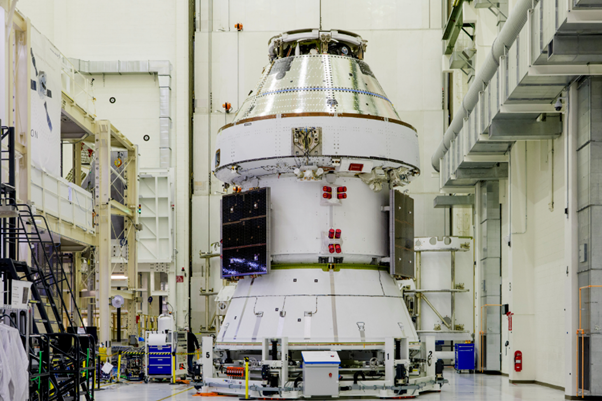
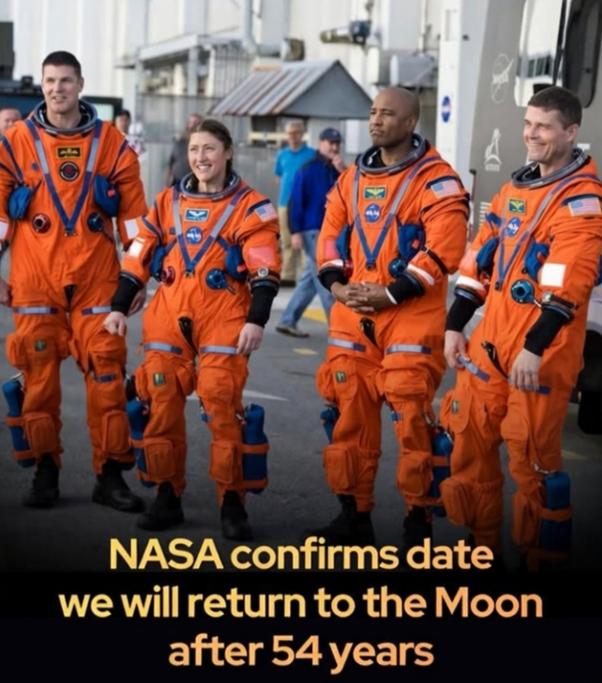
Artemis II is a ten-day flight designed as a full rehearsal for sustained lunar exploration. Four astronauts will make the journey: NASA commander Reid Wiseman, pilot Victor Glover, mission specialist Christina Koch, and Canadian Space Agency astronaut Jeremy Hansen. Koch will become the first woman to travel beyond low Earth orbit, while Hansen will be the first Canadian to take part in a lunar mission.
Launched from Kennedy Space Center in Florida aboard the Space Launch System, the Orion spacecraft will first complete an Earth orbit to verify life-support, propulsion, and navigation systems. It will then perform a trans-lunar injection burn, sending the crew on a free-return trajectory around the Moon. Using lunar gravity, Orion will swing behind the far side in a classic figure-eight path, reaching a distance of more than 230,000 miles from Earth before coasting home.
The mission will conclude with a high-velocity atmospheric re-entry and Pacific Ocean splashdown. No humans have travelled this far since Apollo 17. Artemis II does not plant flags or leave footprints. It validates systems, endurance, and intent. It is a mission built on the assumption that humans are going back to the Moon not once, but repeatedly.
Remembering the First Lunar Age
To understand why Artemis matters, it is worth remembering how extraordinary Apollo truly was. Between 1968 and 1972, nine crewed Apollo missions flew to the Moon. Six landed. Twelve humans walked on another world. Apollo 8 carried humans beyond Earth orbit for the first time and delivered the iconic Earthrise photograph. Apollo 11 placed Neil Armstrong and Buzz Aldrin at Tranquility Base. Apollo 15, 16, and 17 transformed lunar visits into serious science, using rovers, drilling cores, and extended stays.
Apollo was not merely an engineering triumph. It was a political one. It was born from the Cold War, driven by rivalry, and justified by a single strategic objective: demonstrate technological supremacy by reaching the Moon first. When that objective was achieved, the political urgency evaporated.
Apollo did not end because it failed. It ended because it succeeded too well. Budgets were redirected toward the Space Shuttle and low Earth orbit. Public attention shifted. The Moon became a place humanity could go, but no longer needed to justify. Entire generations grew up with the Moon as history rather than destination.
Why Did It Take So Long?
Visionaries like Arthur C. Clarke predicted lunar bases by the year 2000. Films such as 2001: A Space Odyssey assumed permanent infrastructure on the Moon by 1999. These forecasts were not naïve. They simply underestimated how fragile long-term political commitment can be.
Space exploration does not stall because of physics. It stalls because it requires continuity across decades rather than election cycles. Apollo proved that humans could reach the Moon. What it did not solve was how to stay there sustainably. That has changed.
Why This Return Is Different
Artemis represents a shift from spectacle to infrastructure. First, technology. Reusable launch systems, advanced robotics, autonomous navigation, and AI-assisted operations have radically changed the economics of spaceflight. Three-dimensional printing now allows structures to be fabricated from local materials. On the Moon, this means using lunar regolith to build habitats, radiation shielding, and landing pads rather than launching everything from Earth.
Second, resources. Permanently shadowed craters near the Moon’s south pole contain water ice. Water supports life, produces oxygen, and can be split into hydrogen and oxygen for rocket fuel. The Moon becomes not just a destination, but a refuelling station and logistics hub for deeper space missions.
There is also helium-3, deposited in lunar soil by the solar wind. Rare on Earth, it remains a potential future fusion fuel. Whether or not it proves economically viable, its presence underscores a larger truth. The Moon is chemically and strategically valuable.
Third, participation. Artemis is international and commercial. Private companies now build landers, habitats, and support systems. Space is no longer the exclusive domain of superpower governments. It is becoming an ecosystem.
The United States and the Moon Base Vision
NASA’s long-term objective is Artemis Base Camp, a sustained human presence near the Moon’s south pole. The plan includes a pressurised surface habitat, unpressurised and pressurised rovers, mobile habitation platforms, power systems, and in-situ resource utilisation facilities.
This is not a research outpost designed for brief visits. It is the first serious attempt at off-Earth settlement architecture.
A Crowded Moon
The United States is not alone. China has returned lunar samples robotically and plans a crewed landing around 2030, alongside ambitions for a long-term research station. India has demonstrated precision soft landings with Chandrayaan-3 and continues to expand its lunar programme. Russia, Europe, Japan, and Canada all have active lunar strategies, ranging from robotics and habitats to astronaut participation.
This is not the Cold War replayed, but competition is real. Control of cislunar space carries advantages in communications, navigation, scientific observation, and strategic positioning. The Moon matters again because it sits exactly where future space infrastructure must pass.
Humans, Robots, and the Long Game
There is a quieter question beneath the excitement. Humans are fragile in space. Microgravity weakens bones and muscles. Radiation damages DNA. Long-duration exposure changes physiology in ways we do not yet fully understand. On the Moon, gravity is one-sixth of Earth’s. On Mars, one-third.
The likely future of lunar and Martian bases is hybrid. Humans will explore, supervise, and decide. Robots and AI systems will build, maintain, mine, and operate continuously. Machines do not need air, gravity, or radiation shielding. They do not age. They do not tire.
The future of space settlement may belong not to heroes alone, but to partnerships between human intention and machine endurance.
A Stepping Stone, Not the End
The Moon is not the final destination. It is the training ground. It teaches humanity how to live beyond Earth, how to use local resources, how to protect life in hostile environments, and how to operate far from home. Mars will be harder. The stars harder still. Interstellar travel remains firmly theoretical.
Civilisations do not cross oceans without first learning to build ships. The Moon will be humanity’s first true shipyard beyond Earth.
Why Artemis II Matters
Artemis II will not leave footprints on lunar dust. It will do something subtler, and perhaps more important. It will move the Moon from memory back into intention. For those too young to remember Apollo, this is not a return. It is a beginning. This time, humanity is not going for a moment. This time, we are learning how to stay.
Johan West is the author of the forthcoming book The Eye of Creation, writing at the intersection of science, technology, and humanity’s future across non-fiction and speculative thought.